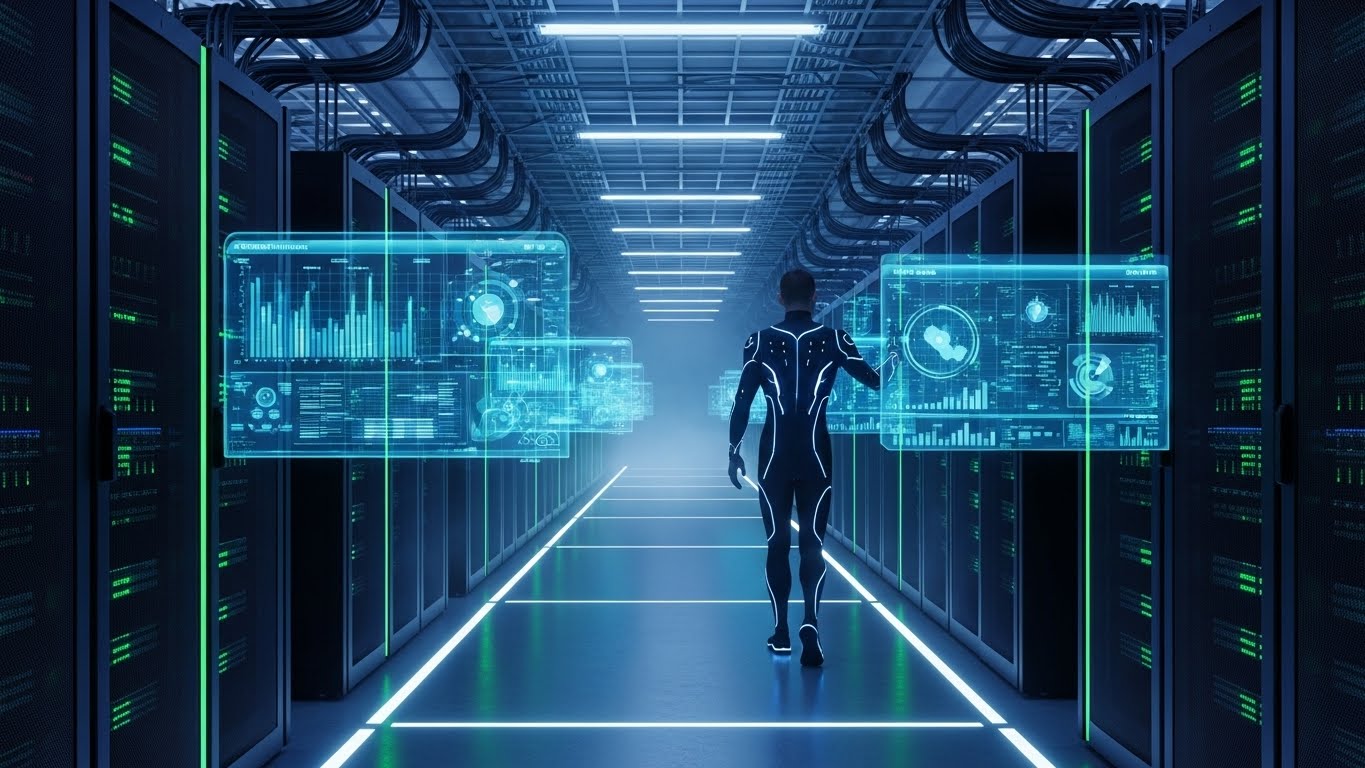

In the ever-evolving landscape of technology, we are witnessing an acceleration of innovation that promises to reshape how we live, work, and communicate. With the dawn of 2025, new advancements in artificial intelligence, cloud computing, and the Internet of Things (IoT) are setting the stage for transformative changes. As we delve deeper into this digital era, it’s essential to explore the emerging trends that will define the future of technology in the coming years.
The Rise of Artificial Intelligence and Machine Learning
Artificial Intelligence (AI) has already had a profound impact on various industries, from healthcare to finance, and it’s only getting started. As we move further into 2025, AI and its subset, machine learning (ML), are expected to continue their rapid evolution. The integration of AI into everyday applications will become even more seamless, offering personalized experiences for users across devices and platforms.
In particular, the use of AI in automation will become more prevalent. From self-driving cars to robotic process automation in businesses, AI is streamlining tasks that were once time-consuming and prone to human error. This will not only improve efficiency but also lead to cost reductions and more innovative solutions.
However, as AI becomes more integrated into our lives, ethical considerations will also play a crucial role. The discussions around AI ethics, data privacy, and bias in algorithms will need to be addressed by both technologists and policymakers to ensure that AI benefits all sectors of society.
Quantum Computing: Unlocking New Frontiers
Quantum computing is another exciting frontier in technology that holds immense potential for solving complex problems that are beyond the reach of classical computers. While still in its early stages, quantum computing promises breakthroughs in fields such as cryptography, drug discovery, climate modeling, and more.
The unique properties of quantum mechanics enable quantum computers to process vast amounts of data simultaneously, offering a level of computational power that traditional computers simply cannot match. As quantum computers become more accessible and scalable, industries will have the tools to tackle challenges that were previously considered unsolvable.
However, the widespread adoption of quantum computing also raises concerns about data security. With quantum computing’s ability to crack existing encryption methods, new cryptographic techniques will need to be developed to safeguard sensitive information. The race to build quantum-resistant encryption is already underway and will be a key area of focus in the coming years.
5G Connectivity: Transforming Communication
The rollout of 5G networks is one of the most anticipated technological advancements in recent years. This new generation of wireless technology promises faster speeds, lower latency, and the ability to connect more devices simultaneously. For businesses and consumers alike, 5G is expected to unlock a world of possibilities.
In practical terms, 5G will significantly enhance the Internet of Things (IoT) ecosystem, enabling the seamless connection of millions of devices across industries like smart cities, autonomous vehicles, healthcare, and agriculture. For instance, in healthcare, the ability to transmit high-quality medical data in real-time will revolutionize telemedicine and remote surgery.
The enhanced speed and bandwidth of 5G will also support the growing demand for augmented reality (AR) and virtual reality (VR) applications. These immersive technologies will become more mainstream, transforming sectors such as entertainment, education, and retail. With 5G, the promise of a fully connected world is becoming more of a reality.
The Internet of Things (IoT): A Connected World
The Internet of Things is no longer just a buzzword; it’s a reality that’s transforming everyday life. IoT refers to the network of interconnected devices that can communicate and exchange data with one another. From smart home devices like thermostats and lights to wearable health trackers and industrial sensors, IoT is making life more convenient and efficient.
In 2025, IoT will continue to expand, creating smarter cities and more responsive systems. Smart infrastructure, including traffic lights, waste management systems, and energy grids, will leverage IoT to optimize resource usage, reduce waste, and improve overall urban planning.
Moreover, the integration of AI and machine learning with IoT devices will allow for predictive maintenance in industries such as manufacturing and transportation. This means that sensors on machinery will detect potential failures before they occur, leading to more efficient operations and reduced downtime.
Edge Computing: Bringing Data Closer to the Source
As IoT devices proliferate and generate massive amounts of data, the need for faster processing and real-time analytics becomes critical. This is where edge computing comes into play. Edge computing involves processing data closer to the source of the data, rather than sending it to a centralized cloud server.
By reducing the distance data must travel, edge computing minimizes latency, making it ideal for applications that require immediate feedback, such as autonomous vehicles, industrial automation, and healthcare monitoring. In addition, edge computing reduces the burden on network infrastructure and enhances data security by keeping sensitive information closer to the source.
The continued growth of edge computing will enable new use cases in sectors like agriculture, retail, and logistics, where real-time insights are crucial for decision-making and operational efficiency.
Blockchain Beyond Cryptocurrency
Blockchain technology, most commonly associated with cryptocurrencies like Bitcoin, has evolved far beyond its initial use case. Today, blockchain is being explored as a solution for a wide range of applications, including supply chain management, digital identity verification, and secure voting systems.
Blockchain’s decentralized and immutable nature ensures transparency and security, making it a valuable tool for industries that rely on trust and accountability. For example, in supply chain management, blockchain can provide an immutable record of every transaction, from the origin of raw materials to the final product. This helps reduce fraud and ensures the authenticity of goods.
As blockchain continues to mature, its potential for reshaping industries will only grow. In 2025, we can expect blockchain to be integrated into more business processes, driving greater transparency, efficiency, and security.
Augmented Reality and Virtual Reality: The New Normal
Augmented Reality (AR) and Virtual Reality (VR) have already made their mark in gaming and entertainment, but their potential extends far beyond these sectors. By 2025, AR and VR are expected to become integral tools in industries like education, retail, and healthcare.
In education, VR can offer immersive learning experiences, allowing students to explore historical sites, interact with scientific models, or practice skills in virtual environments. In retail, AR can enhance shopping experiences by allowing customers to visualize products in their homes before purchasing.
Healthcare is another area where AR and VR are making a significant impact. VR is already being used for pain management and therapy, while AR assists surgeons during complex procedures by overlaying critical information in real-time.
Sustainability and Green Technologies
As concerns about climate change and environmental degradation intensify, technology will play a crucial role in addressing these challenges. In 2025, we will see a surge in green technologies aimed at reducing carbon footprints and promoting sustainability.
Solar power, wind energy, and energy storage technologies will continue to advance, making renewable energy sources more efficient and affordable. Additionally, innovations in electric vehicles (EVs) and battery technology will drive the transition to cleaner transportation.
Technology will also contribute to more sustainable agriculture through precision farming, where data analytics and IoT devices help optimize water usage, reduce pesticide use, and increase crop yields. In urban planning, smart cities will leverage data and technology to reduce waste, improve air quality, and create more sustainable environments.
Conclusion
The future of technology is filled with exciting possibilities that will shape the way we live, work, and interact with the world around us. From AI and quantum computing to 5G and blockchain, the innovations of tomorrow will have a profound impact on every aspect of our lives.
As we move further into 2025, it’s clear that the digital transformation is just beginning. By embracing these technologies and addressing the challenges that come with them, we can unlock new opportunities for growth, sustainability, and progress. The future of tech is not just about the tools we use, but the ways in which we leverage them to create a better, more connected world for all.