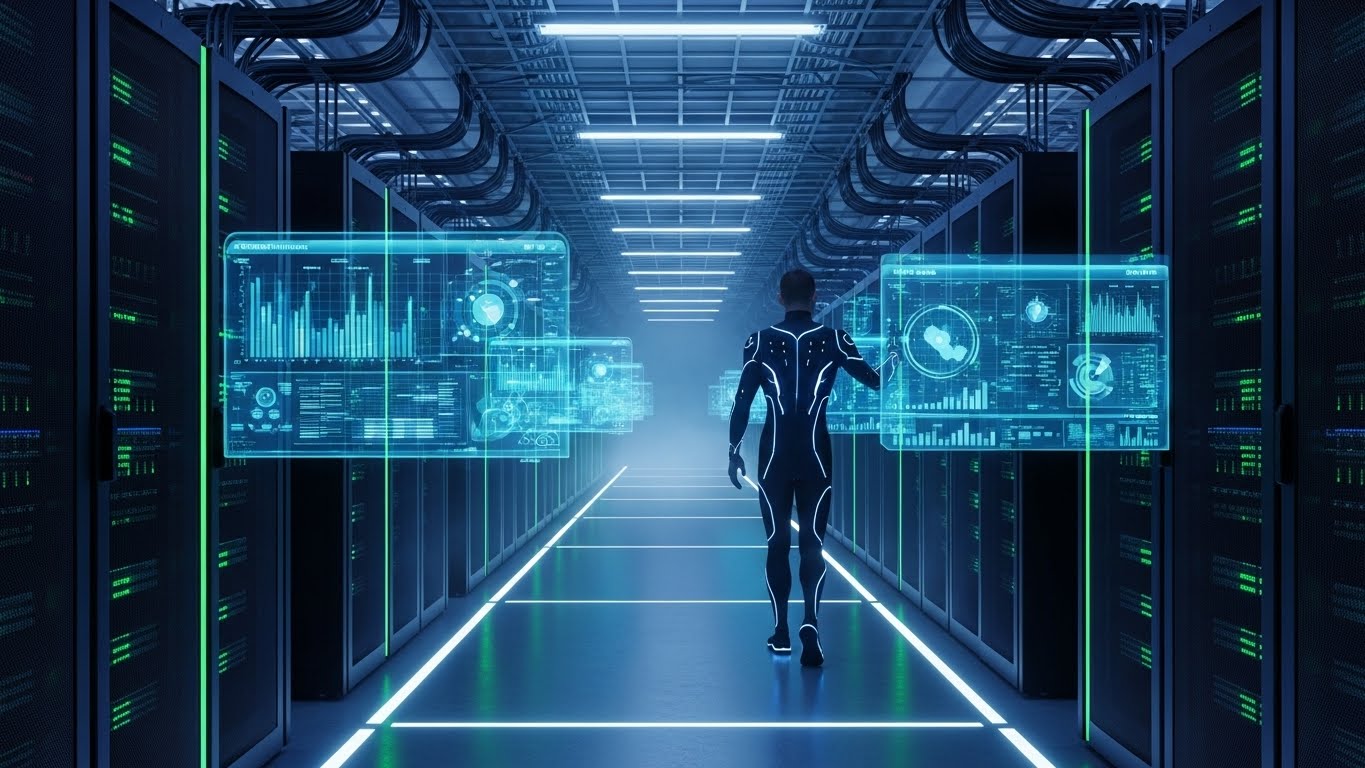

The digital landscape is evolving at an incredible pace, and with each passing day, technology is pushing the boundaries of what’s possible. Whether it’s transforming industries, reshaping how we interact with the world, or revolutionizing our daily lives, the impact of emerging technologies cannot be overstated. In this post, we’ll explore some of the most exciting trends that are reshaping the future, offering insights into how they will redefine our world.
Artificial Intelligence: The Brainpower of the Future
Artificial intelligence (AI) has already begun making waves in nearly every sector, from healthcare to finance and beyond. But the potential for AI is far from realized. We are on the cusp of a world where AI systems are not just reactive but proactive, capable of making decisions that can impact everything from business operations to personal lives.
One of the most exciting areas where AI is poised to change the game is in automation. With machine learning, AI can analyze vast amounts of data to optimize processes, predict trends, and even make decisions that were once solely in human hands. In healthcare, for instance, AI can assist doctors by analyzing medical images, detecting diseases early, and suggesting treatment options based on a patient’s unique genetic profile.
What’s more fascinating is AI’s role in creativity. We’re now seeing AI-generated music, art, and writing, blurring the lines between human and machine-made content. The future promises a deeper integration of AI, where these systems will not only assist us but actively collaborate in producing innovations that we once thought only humans could create.
5G and Beyond: Speeding Up the Digital Transformation
5G technology promises to be a game-changer in how we connect to the internet and each other. With speeds up to 100 times faster than 4G, 5G will open the door to a new era of connectivity. This faster and more reliable network will enable everything from augmented reality (AR) to the Internet of Things (IoT) to flourish.
The promise of 5G extends beyond just faster internet speeds. It’s about creating a more connected world. Imagine real-time communication between self-driving cars, instant transmission of medical data for remote surgeries, or entire smart cities where traffic lights, public transport, and utilities are synchronized. These advancements will change how we interact with technology on a daily basis and open up new opportunities for businesses to innovate.
The real magic of 5G lies in its low latency, which means less delay between the action and the response. For industries such as healthcare, this can mean quicker reaction times in emergencies, improving patient outcomes. For consumers, this will translate into lag-free gaming, smooth video calls, and quicker downloads, all of which enhance the overall digital experience.
Blockchain: Trust, Transparency, and Security
While blockchain is most commonly associated with cryptocurrencies like Bitcoin, its impact reaches far beyond digital currencies. At its core, blockchain offers a decentralized and immutable ledger for transactions, making it one of the most secure ways to record and verify data.
One of the key advantages of blockchain is its ability to offer transparency and trust in areas where these qualities are crucial. For example, in supply chain management, blockchain can provide an unalterable record of a product’s journey from manufacturer to consumer. This ensures that consumers can trace the origin of products and confirm their authenticity, particularly in industries like pharmaceuticals, luxury goods, and food.
Blockchain’s potential is not limited to just securing financial transactions. It has the ability to disrupt industries such as healthcare, voting systems, and even intellectual property management. As businesses and governments begin to realize blockchain’s full potential, we can expect a significant shift toward decentralized systems that will change how data is stored, managed, and shared globally.
Quantum Computing: The Next Frontier of Problem Solving
Quantum computing is perhaps the most mind-bending of the emerging technologies, as it relies on principles of quantum mechanics to process information in fundamentally new ways. Unlike classical computers, which use bits to represent data as either 0 or 1, quantum computers use qubits, which can exist in multiple states simultaneously, allowing them to solve complex problems at an exponentially faster rate.
While quantum computing is still in its infancy, its potential to revolutionize industries is immense. In fields like cryptography, quantum computers could break through traditional encryption methods, leading to a need for new security protocols. In material science, they could simulate molecular structures in ways that were previously impossible, leading to breakthroughs in everything from drug development to clean energy technologies.
However, the true power of quantum computing lies in its ability to solve problems that are beyond the reach of today’s supercomputers. From climate modeling to financial forecasting, quantum computing has the potential to unlock new solutions to some of the world’s most pressing challenges. Although we are still years away from quantum computers becoming mainstream, the groundwork being laid today will pave the way for extraordinary advancements in the near future.
Virtual Reality and Augmented Reality: A New Dimension of Interaction
Virtual Reality (VR) and Augmented Reality (AR) have already begun to transform industries such as gaming, education, and entertainment. VR immerses users in completely digital environments, while AR overlays digital content onto the real world. These technologies are not only changing how we experience entertainment but also how we work, learn, and connect.
In education, VR is being used to create immersive learning experiences, where students can explore historical events or conduct virtual science experiments. In healthcare, AR is enhancing surgical procedures by providing real-time data and visualizations, guiding surgeons through complex operations. Businesses are also leveraging AR to improve customer experiences, from virtual try-ons in fashion to interactive product demos.
The future of VR and AR goes beyond just applications in entertainment and training. We are entering a new era of digital interaction where physical and digital spaces merge seamlessly, offering new ways for individuals and businesses to engage with the world around them.
Sustainable Tech: Innovations for a Greener Future
As the global community grapples with climate change, the tech industry is stepping up with solutions designed to minimize environmental impact and promote sustainability. Green tech, from energy-efficient devices to solar-powered innovations, is not just a trend but a necessity for a sustainable future.
Tech companies are exploring ways to reduce their carbon footprints by using renewable energy, recycling materials, and minimizing e-waste. Innovations such as electric vehicles (EVs), energy-efficient smart homes, and carbon capture technologies are leading the charge toward a greener world. In the coming years, we can expect a greater push for sustainable technologies that align with both environmental goals and economic viability.
The role of tech in sustainability goes beyond just green products; it’s about leveraging technology to optimize resource use, reduce waste, and create smarter systems that benefit the planet. With the help of AI, blockchain, and IoT, sustainable tech can drive efficiencies across industries, making our world a cleaner, more eco-friendly place.
Conclusion: Embracing the Future of Technology
The future of technology is both exciting and daunting, with possibilities that seem limitless. From AI’s role in transforming industries to the groundbreaking potential of quantum computing, emerging technologies are set to redefine how we live and work. As these innovations continue to evolve, one thing is clear: the tech of tomorrow will shape the way we experience the world, and it’s up to us to embrace and adapt to the changes that lie ahead. By understanding these advancements, we can prepare for a future where technology enhances every aspect of our lives.