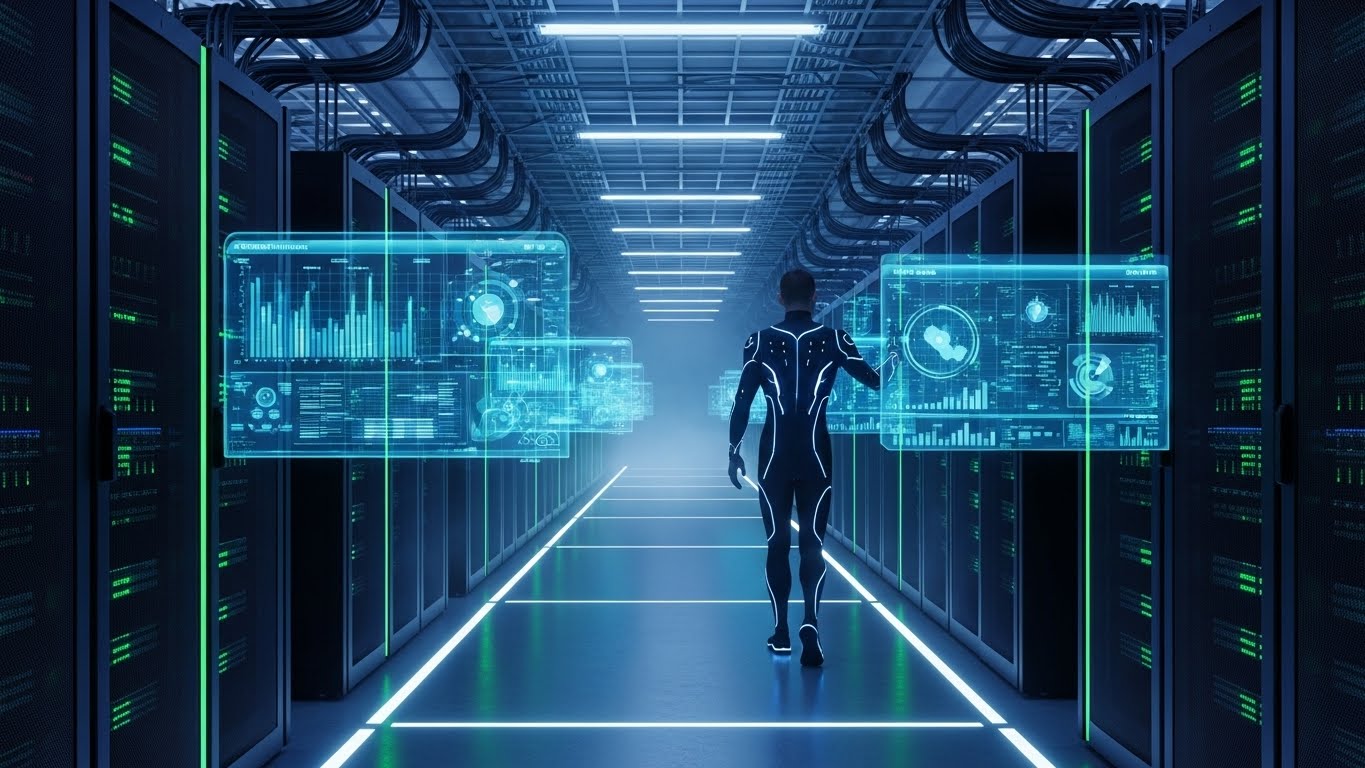

Technology is transforming the way we live, work, and interact with the world around us at an unprecedented pace. From artificial intelligence and quantum computing to augmented reality and the Internet of Things, we are witnessing a revolution that is reshaping industries, societies, and daily life. As technology advances, new possibilities are being unlocked, and old paradigms are being challenged. But with these innovations come both opportunities and challenges, and understanding how these technologies will shape the future is crucial.
In this blog post, we will explore the technological innovations that are not only dominating today but are poised to lead the charge into the future. We will also examine the implications of these advancements, their potential impact on various sectors, and how they will change our world in ways we cannot yet fully anticipate.
Artificial Intelligence: The Brain Behind the Revolution
Artificial intelligence (AI) has emerged as one of the most transformative forces of the 21st century. From self-driving cars to predictive analytics, AI is finding applications across a wide range of industries. What began as a niche field of research is now becoming a core technology that powers everything from consumer products to enterprise solutions. But what exactly is AI, and how is it reshaping our world?
The Rise of Machine Learning and Deep Learning
At the heart of AI lies machine learning (ML), a subset of AI that enables systems to learn from data and improve over time. Deep learning, a more advanced form of machine learning, mimics the human brain’s neural networks and can process complex data at incredible speeds. These technologies have already proven their value in industries like healthcare, finance, retail, and entertainment. For instance, AI-powered algorithms can analyze medical images to detect diseases, while in finance, AI models predict market trends and assist in fraud detection.
As AI becomes more sophisticated, it will begin to take on increasingly complex tasks, ranging from creative work like writing music and generating art to more technical fields like drug discovery and climate modeling. The possibilities are endless, and while AI has the potential to increase efficiency and productivity, it also raises questions about its long-term implications on employment, ethics, and privacy.
AI in Everyday Life
AI is no longer confined to research labs or tech giants—it’s making its way into our daily lives in ways that we may not even notice. Virtual assistants like Siri, Alexa, and Google Assistant use AI to understand voice commands, recommend products, and manage tasks. In the transportation sector, self-driving cars powered by AI are beginning to make roads safer and more efficient. AI is even changing the way we shop, as recommendation engines suggest products based on our browsing history.
As AI systems become more integrated into our lives, they will continue to evolve, becoming more capable of handling even more nuanced tasks. However, the rapid development of AI also brings challenges in terms of transparency, accountability, and bias. Developers must ensure that AI systems are transparent, fair, and ethical in their decision-making processes.
Quantum Computing: Unlocking the Power of the Unimaginable
While AI is changing the way we process and analyze data, quantum computing is poised to redefine what is computationally possible. Unlike classical computers, which use bits to process information as 0s and 1s, quantum computers use qubits, which can represent both 0 and 1 simultaneously. This fundamental difference allows quantum computers to solve problems that are beyond the reach of even the most powerful classical supercomputers.
Breaking Barriers in Problem-Solving
Quantum computing promises to revolutionize industries like pharmaceuticals, logistics, and materials science. For example, in drug development, quantum computers could simulate molecular structures more efficiently, leading to faster and more accurate drug discovery. In logistics, quantum algorithms could optimize delivery routes and supply chains in ways that were previously unimaginable. For financial institutions, quantum computers could perform complex risk assessments and trading strategies in real-time.
While quantum computing holds immense potential, it is still in its infancy. Researchers are working to overcome significant technical challenges, such as error rates and qubit stability. But as the field matures, we can expect quantum computing to open up new frontiers in scientific discovery and technological innovation.
Quantum Security and Cryptography
One of the most exciting—and concerning—applications of quantum computing is in the realm of cryptography. Current encryption methods rely on the computational difficulty of problems like factoring large numbers, a task that classical computers struggle with. However, quantum computers could solve these problems exponentially faster, potentially rendering current encryption systems obsolete. This has led to a growing focus on developing quantum-resistant encryption methods to protect sensitive data.
As quantum computing progresses, the race to build secure systems will be critical. Governments and private sector organizations are already investing in quantum encryption to safeguard data in a quantum-powered world.
The Internet of Things: Connecting Our World
The Internet of Things (IoT) refers to the network of interconnected devices that communicate with one another to share data and automate processes. From smart homes to industrial applications, IoT is making it possible for everyday objects to become “smart” and work in concert with other devices to improve efficiency, safety, and convenience.
Smart Homes and Cities
IoT is transforming how we live in profound ways. In the home, smart devices such as thermostats, lighting systems, refrigerators, and security cameras can all be controlled via a smartphone app or voice commands. These devices not only improve convenience but also offer energy savings by optimizing usage patterns. For example, a smart thermostat can learn your schedule and adjust heating or cooling to reduce energy consumption when you’re away.
On a larger scale, IoT is also reshaping urban living. Smart cities are leveraging IoT technologies to manage traffic, optimize energy usage, and enhance public safety. For example, smart traffic lights can adapt in real-time to traffic flow, reducing congestion and pollution. Public transportation systems can track buses and trains, providing commuters with real-time updates on arrival times.
IoT in Industry: The Rise of Smart Factories
IoT is not only making our homes and cities smarter but also revolutionizing industries. In manufacturing, IoT devices can monitor machinery performance, predict maintenance needs, and reduce downtime. Smart factories are more efficient, flexible, and responsive to changes in production needs, thanks to IoT technology.
Similarly, in agriculture, IoT sensors can monitor soil moisture, weather conditions, and crop health, helping farmers optimize irrigation, reduce pesticide use, and improve yields. The potential for IoT in sectors like healthcare, logistics, and retail is also vast, as connected devices provide insights that help improve decision-making, streamline operations, and enhance customer experiences.
5G: The Next Generation of Connectivity
The rollout of 5G networks is one of the most anticipated technological advancements in recent years. 5G promises to offer speeds up to 100 times faster than current 4G networks, with lower latency and increased capacity. This leap in connectivity will not only enhance mobile internet speeds but also enable new applications and services that were previously not possible.
The Impact on Streaming and Communication
With 5G, high-quality video streaming will become even more seamless. Virtual and augmented reality applications, which require high bandwidth and low latency, will be able to deliver smooth experiences on mobile devices. This will make immersive experiences more accessible to the masses, from VR gaming to live virtual events.
The impact of 5G on communication will also be profound. Video calls and online collaboration tools will become more reliable, and businesses will be able to connect with customers and clients in real-time with minimal delay. For industries like telemedicine, 5G will make remote consultations more efficient, allowing for faster, more accurate diagnoses.
The Enabler for Smart Cities and Autonomous Vehicles
5G will also be a critical enabler for the development of smart cities and autonomous vehicles. In smart cities, 5G will support the dense networks of sensors and devices needed to manage everything from traffic flow to waste management. Autonomous vehicles, which rely on real-time communication and data processing, will also benefit from 5G’s ultra-low latency and high reliability. The ability of vehicles to communicate with each other and with road infrastructure will be essential for ensuring the safety and efficiency of self-driving cars.
Blockchain: Revolutionizing Trust and Transparency
Blockchain technology is best known as the underlying system behind cryptocurrencies like Bitcoin, but its potential extends far beyond digital currencies. At its core, blockchain is a decentralized ledger system that records transactions in a transparent, secure, and tamper-proof manner. This has profound implications for industries that rely on trust and transparency, such as finance, supply chains, and healthcare.
Blockchain in Finance and Payments
In the financial sector, blockchain is revolutionizing payment systems by providing a faster, more secure, and transparent way to conduct transactions. Traditional payment systems can be slow and expensive, particularly for cross-border transfers. Blockchain technology enables peer-to-peer transactions without intermediaries, drastically reducing costs and processing times.
Moreover, blockchain’s transparency and security features make it an ideal solution for combating fraud and ensuring compliance in industries like banking and insurance.
Blockchain in Supply Chains and Healthcare
Blockchain is also transforming supply chains by providing a transparent and traceable record of every transaction along the chain. This ensures that goods are sourced ethically, and consumers can track products from origin to final destination. In healthcare, blockchain is being used to secure patient records, ensuring privacy while providing authorized healthcare providers with access to a patient’s medical history.
Conclusion: Embracing the Technological Frontier
The future of technology is full of promise, but it also comes with its share of challenges. As AI, quantum computing, IoT, 5G, and blockchain continue to evolve, they will shape industries, economies, and societies in ways we can barely begin to imagine. The rapid pace of innovation is exciting, but it also requires careful consideration of the ethical, social, and economic implications of these technologies.
In the coming years, the convergence of these technologies will create new opportunities, streamline operations, and enhance human capabilities. However, it is essential that we remain mindful of the potential risks and ensure that these advancements benefit everyone. By embracing the future of technology responsibly and sustainably, we can create a world that is smarter, more efficient, and more connected than ever before.