
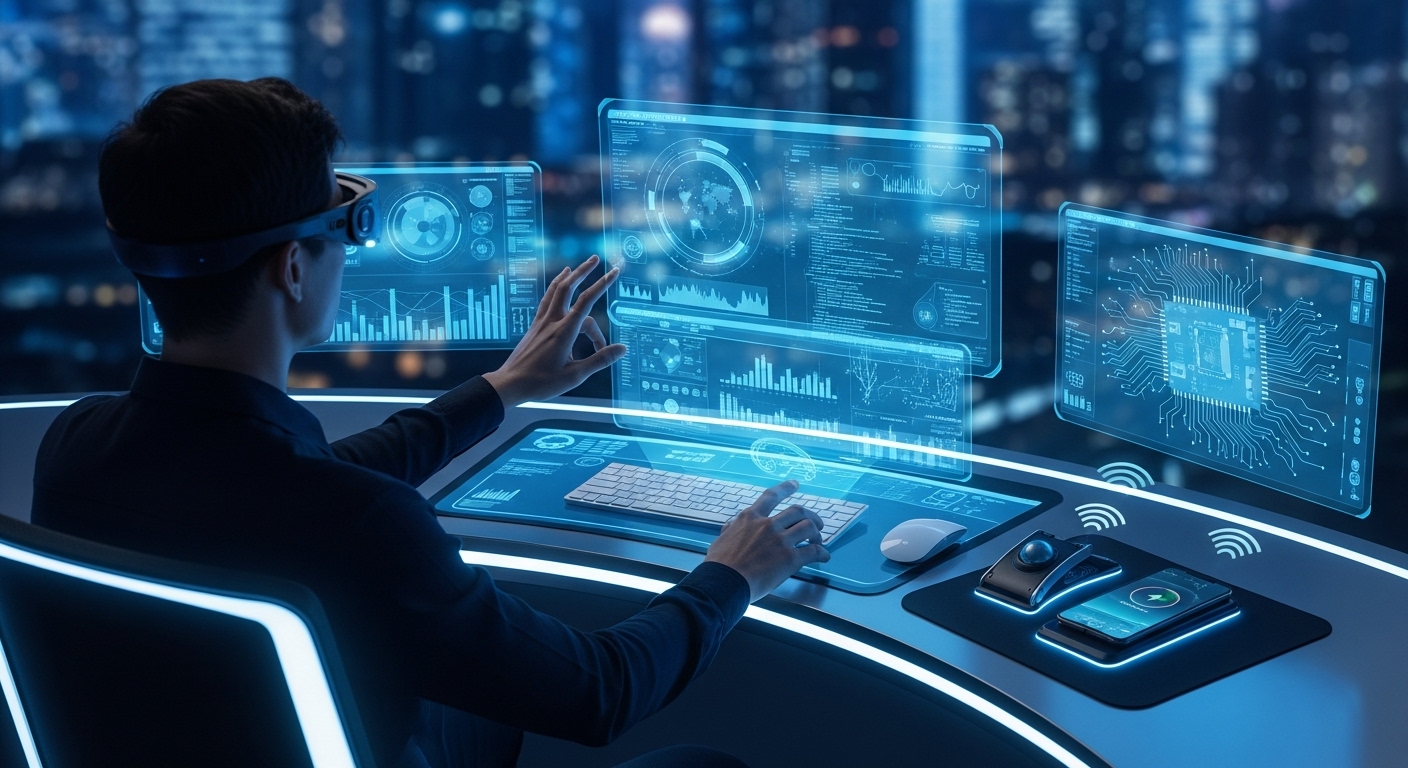
Introduction: A World Transformed by Technology
Technology has always been the driving force behind societal progress, from the Industrial Revolution to the digital age. But in recent years, the pace of innovation has accelerated, bringing profound changes to nearly every aspect of life. From artificial intelligence and automation to quantum computing and blockchain, the world is on the brink of a new technological era—one that promises to redefine how we live, work, and interact with each other.
As technology continues to advance at an exponential rate, it’s clear that the future will look vastly different from the present. In this blog post, we’ll explore some of the most exciting technological developments that are set to shape the future. We’ll dive into how these innovations are already impacting various industries and what they mean for individuals, businesses, and society as a whole.
Artificial Intelligence: A New Frontier of Innovation
Artificial Intelligence (AI) has long been a topic of science fiction, but today it is rapidly becoming a reality that is revolutionizing industries worldwide. AI refers to machines and software designed to simulate human intelligence, learning from data, adapting to new situations, and making decisions with minimal human intervention. It is already making waves in sectors like healthcare, finance, education, and transportation.
In healthcare, AI is being used to help diagnose diseases, predict patient outcomes, and even recommend treatment plans. Machine learning algorithms are capable of analyzing vast amounts of medical data, including imaging scans, patient histories, and genetic information, to provide more accurate and timely diagnoses than traditional methods. This could not only save lives but also significantly reduce healthcare costs by improving the efficiency of treatment and patient management.
In the world of finance, AI is being applied to detect fraud, automate trading, and personalize financial services. Algorithms can analyze financial transactions in real-time, identifying patterns and anomalies that might suggest fraudulent activity. AI-powered chatbots are also becoming common in customer service, providing instant responses to inquiries and helping businesses manage customer relationships more effectively.
The future of AI is both exciting and uncertain. While it holds the potential to vastly improve productivity and efficiency, there are concerns about its impact on employment. As AI continues to advance, many jobs that are repetitive or data-driven may be automated, leading to potential job displacement in sectors like manufacturing, retail, and customer service. The ethical implications of AI, particularly in areas like decision-making, privacy, and bias, will also need to be addressed as the technology evolves.
Blockchain Technology: Redefining Trust and Security
Blockchain technology has gained significant attention in recent years, primarily due to its association with cryptocurrencies like Bitcoin and Ethereum. However, the potential of blockchain extends far beyond digital currencies. At its core, blockchain is a decentralized and distributed ledger that records transactions across multiple computers in a way that makes it difficult or impossible to alter or hack.
Blockchain’s ability to provide secure, transparent, and tamper-proof records has a wide range of applications across industries. In the financial sector, blockchain is already being used to streamline payments and cross-border transactions, reducing the need for intermediaries like banks and payment processors. By eliminating these middlemen, blockchain can lower transaction fees, speed up processing times, and reduce the risk of fraud.
Beyond finance, blockchain is also transforming supply chain management, ensuring transparency and traceability from the point of origin to the final consumer. In industries like food, pharmaceuticals, and luxury goods, blockchain can track the movement of products through the supply chain, providing consumers with more confidence in the authenticity and safety of their purchases.
In addition, blockchain is revolutionizing industries like real estate, healthcare, and even voting systems. Smart contracts, which are self-executing agreements coded into the blockchain, are being used to automate processes and eliminate the need for manual intervention, reducing errors and costs. While blockchain is still in its early stages, its potential to create more secure, transparent, and efficient systems is undeniable.
The Internet of Things (IoT): A Hyper-Connected World
The Internet of Things (IoT) refers to the network of physical devices—such as smartphones, wearables, vehicles, and home appliances—that are connected to the internet and can communicate with each other. This connectivity allows devices to collect and exchange data, creating a smarter, more efficient world.
In the home, IoT is already making daily life more convenient and efficient. Smart home devices like thermostats, security cameras, and lighting systems can be controlled remotely via smartphones, allowing users to monitor and adjust settings even when they’re not at home. IoT-enabled appliances, like refrigerators that can track inventory and suggest recipes, are becoming more common in modern homes.
In the business world, IoT is revolutionizing industries like manufacturing, logistics, and agriculture. In factories, IoT sensors can monitor equipment performance in real-time, helping businesses detect issues before they lead to costly breakdowns. In agriculture, IoT devices can monitor soil conditions, weather patterns, and crop health, enabling farmers to optimize their operations and reduce waste.
The possibilities of IoT are endless, but as the number of connected devices continues to grow, so too do the challenges. Security is a major concern, as more devices connected to the internet means more potential vulnerabilities. Ensuring that IoT networks are secure and that sensitive data is protected will be critical to the successful adoption of this technology.
Quantum Computing: A Leap Into the Future
Quantum computing is one of the most exciting—and most complex—technologies on the horizon. Unlike classical computers, which use bits to represent data as either a 0 or a 1, quantum computers use quantum bits, or qubits, which can represent both 0 and 1 simultaneously. This ability to process multiple possibilities at once gives quantum computers the potential to solve problems that would take traditional computers millions of years to solve.
The impact of quantum computing on industries such as cryptography, pharmaceuticals, and logistics could be transformative. For example, quantum computers could be used to break encryption algorithms that are currently considered unbreakable, posing both opportunities and challenges for data security. They could also be used to simulate molecular interactions at an atomic level, leading to breakthroughs in drug discovery and material science.
However, quantum computing is still in its infancy, and there are significant technical challenges to overcome. Building and maintaining a quantum computer is incredibly difficult, as qubits are extremely sensitive to their environment and can easily become unstable. Despite these hurdles, major companies like Google, IBM, and Microsoft are investing heavily in quantum research, and it’s expected that we will see significant advances in the coming decades.
5G Networks: The Next Frontier of Connectivity
5G, the fifth generation of mobile networks, is set to revolutionize connectivity by offering faster speeds, lower latency, and the ability to support more devices simultaneously. Unlike its predecessors, 5G will provide near-instantaneous data transmission, enabling a new era of innovation in areas such as autonomous vehicles, telemedicine, and smart cities.
In the realm of autonomous vehicles, 5G will be critical for enabling real-time communication between vehicles, infrastructure, and pedestrians. This will allow self-driving cars to make split-second decisions based on live data, improving safety and efficiency. In healthcare, 5G will enable remote surgeries and real-time monitoring of patients, making healthcare more accessible and efficient.
5G will also play a key role in the development of smart cities. With faster connectivity, cities can become more efficient by integrating IoT devices into public infrastructure. For example, traffic lights could be adjusted in real-time based on traffic flow, while energy usage could be optimized through smart grids. However, the rollout of 5G is not without its challenges. Infrastructure costs, security concerns, and regulatory issues are just a few of the obstacles that need to be addressed before 5G can reach its full potential.
The Ethical Implications of Technology
As we look to the future, it’s important to consider the ethical implications of these technological advancements. From AI and quantum computing to blockchain and IoT, new technologies bring both opportunities and challenges. Issues like data privacy, cybersecurity, and the potential for job displacement need to be carefully considered as we continue to innovate.
For example, the rise of AI and automation raises important questions about employment. While these technologies can increase efficiency and productivity, they also have the potential to replace human workers in certain sectors. Preparing the workforce for these changes through education, training, and reskilling will be essential to ensuring that people can thrive in the future economy.
Similarly, as more data is collected through IoT devices, the potential for misuse or abuse of personal information increases. Companies and governments will need to implement strong regulations and safeguards to protect individuals’ privacy and ensure that data is used ethically.
Conclusion: Embracing the Future of Technology
The future of technology is full of promise and potential. From AI and blockchain to quantum computing and 5G, these innovations are poised to transform the way we live, work, and interact with the world. While challenges exist, the opportunities for growth and improvement are vast.
As we move forward, it’s essential to approach these technologies with caution and responsibility. The ethical implications of technology must be addressed to ensure that it benefits society as a whole. By embracing innovation and collaborating across industries and sectors, we can build a future where technology works for the betterment of humanity.
Word Count: 1,522