
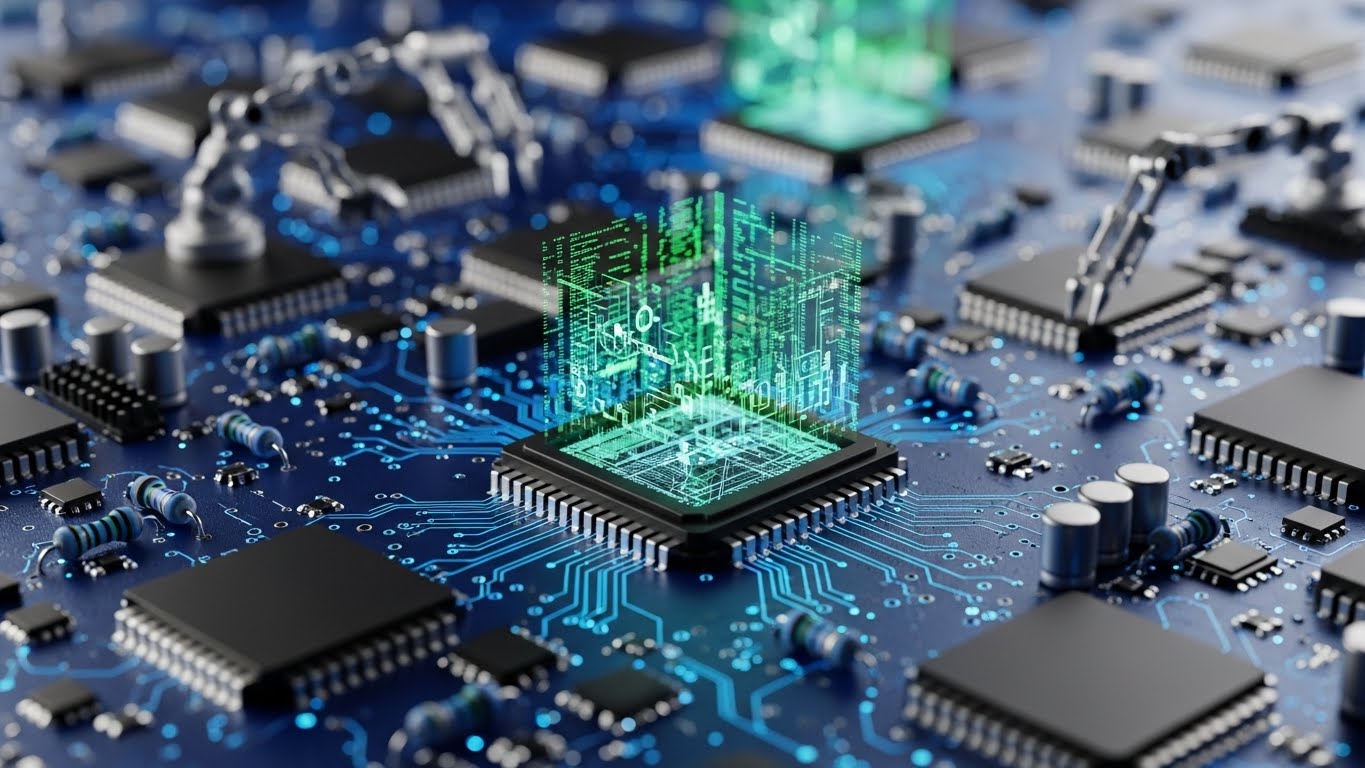
In the past few decades, technology has been advancing at an unprecedented pace. From the early days of the internet to the rise of smartphones and the explosion of artificial intelligence (AI), we have witnessed an era of innovation that has significantly impacted every aspect of our lives. But the world of tech is not slowing down. Emerging technologies such as quantum computing, blockchain, 5G, and augmented reality (AR) are set to revolutionize how we live, work, and interact with each other. In this blog post, we will explore some of these exciting technologies, how they are reshaping various industries, and what the future might look like.
The Rise of Artificial Intelligence: Beyond Automation
Artificial intelligence has come a long way since its inception in the mid-20th century. Initially, AI was seen as a tool for automating repetitive tasks and processing large amounts of data. But today, AI is much more than that. With advancements in machine learning and deep learning algorithms, AI is now capable of performing complex tasks such as natural language processing, image recognition, and even autonomous decision-making.
One of the most exciting applications of AI is in healthcare. AI-powered diagnostic tools are enabling doctors to detect diseases at an earlier stage, leading to better patient outcomes. For instance, AI is now being used to analyze medical images such as X-rays and MRIs to identify abnormalities that may not be visible to the human eye. Similarly, AI is being leveraged to develop personalized treatment plans by analyzing a patient’s genetic information and medical history.
Moreover, AI is also transforming industries like finance, retail, and transportation. In finance, AI is being used for fraud detection, algorithmic trading, and personalized financial advice. In retail, AI helps companies optimize inventory management, enhance customer experiences, and even predict consumer behavior. Meanwhile, in the transportation sector, AI is driving the development of autonomous vehicles, promising a future where self-driving cars could become a common sight on our roads.
The Power of 5G: A Game Changer for Connectivity
The rollout of 5G networks is one of the most anticipated developments in the world of tech. 5G promises faster speeds, lower latency, and greater connectivity than its predecessor, 4G. This will unlock new possibilities for industries such as healthcare, manufacturing, and entertainment.
One of the key advantages of 5G is its ability to support massive numbers of connected devices simultaneously. This will be particularly important as the Internet of Things (IoT) continues to expand. From smart homes to wearable devices, IoT is creating a connected world where everything—from household appliances to cars—can communicate with each other. 5G will provide the high-speed network infrastructure required to handle the vast amounts of data generated by these devices, enabling real-time communication and more efficient systems.
In healthcare, 5G will enable the remote monitoring of patients, allowing doctors to access real-time data from wearable devices and sensors. This could lead to better patient care and more accurate diagnoses. Similarly, in manufacturing, 5G will enable smart factories where machines can communicate with each other to optimize production processes and minimize downtime.
5G will also revolutionize the entertainment industry. With faster speeds and lower latency, 5G will make it possible to stream high-quality video content in real-time, even in remote areas. This will enable the growth of augmented and virtual reality applications, which require high bandwidth and low latency to deliver immersive experiences.
Blockchain: Revolutionizing Trust and Security
Blockchain technology has gained significant attention in recent years, primarily due to its association with cryptocurrencies like Bitcoin and Ethereum. However, blockchain is not just limited to digital currencies. It is a decentralized and transparent digital ledger system that has the potential to disrupt a wide range of industries.
One of the key features of blockchain is its ability to provide secure, tamper-proof transactions without the need for intermediaries such as banks or government agencies. This makes blockchain particularly useful in industries where trust and security are critical, such as finance, supply chain management, and healthcare.
In finance, blockchain is being used to facilitate cross-border payments, reduce transaction fees, and eliminate fraud. By eliminating the need for intermediaries, blockchain can speed up transactions and reduce costs, making financial systems more efficient. In supply chain management, blockchain is being used to track the movement of goods from manufacturers to consumers, ensuring that products are sourced ethically and that there is no fraud or counterfeiting.
In healthcare, blockchain has the potential to improve data security and patient privacy. By storing medical records on a blockchain, patients can have greater control over their personal health data and share it with healthcare providers in a secure and transparent manner. Blockchain can also be used to verify the authenticity of pharmaceuticals, reducing the prevalence of counterfeit drugs in the market.
Quantum Computing: Unlocking New Frontiers in Processing Power
Quantum computing is one of the most exciting and complex fields in the world of tech. While classical computers rely on bits to process information (which can be either 0 or 1), quantum computers use quantum bits, or qubits, which can exist in multiple states simultaneously. This ability to perform multiple calculations at once makes quantum computers potentially much more powerful than classical computers.
Although quantum computing is still in its early stages, it has the potential to revolutionize fields such as cryptography, material science, and artificial intelligence. For example, quantum computers could break current encryption methods, prompting the development of new, quantum-resistant encryption techniques. In material science, quantum computing could help scientists discover new materials with specific properties, which could lead to breakthroughs in areas such as energy storage and renewable energy.
Quantum computing could also accelerate the development of AI by enabling the processing of much larger datasets and solving complex problems much faster than traditional computers. This could open up new possibilities in fields like drug discovery, climate modeling, and financial forecasting.
Augmented Reality and Virtual Reality: Transforming Our Perception of the World
Augmented reality (AR) and virtual reality (VR) have been gaining traction in recent years, thanks to advances in hardware and software. While VR immerses users in a fully digital environment, AR overlays digital content onto the physical world. Both technologies have the potential to transform a wide range of industries, from gaming and entertainment to education and healthcare.
In gaming, VR offers players a more immersive experience by placing them inside the game world. With the development of more advanced VR headsets and controllers, players can interact with their virtual environments in a more natural and intuitive way. AR, on the other hand, is already being used in popular apps like Pokémon Go, where players can interact with digital characters overlaid onto the real world.
In healthcare, AR is being used to assist in surgeries by providing surgeons with real-time data and 3D visualizations of a patient’s anatomy. This can lead to more precise and less invasive procedures. Similarly, AR is being used in education to create interactive learning experiences that engage students in a more dynamic way.
Both AR and VR are also set to play a key role in the future of work. Virtual meetings and conferences are already becoming more common, and as AR and VR technologies continue to improve, remote collaboration will become even more immersive. Imagine attending a virtual meeting where you can interact with colleagues in a 3D virtual space, or collaborating on a project using virtual tools that allow you to manipulate 3D models in real-time.
Conclusion: Embracing the Future of Tech
The world of technology is evolving at a rapid pace, and the emerging technologies discussed above are just the tip of the iceberg. As we look toward the future, we can expect to see even more advancements in AI, 5G, blockchain, quantum computing, and AR/VR. These technologies will continue to shape the way we live, work, and interact with each other, opening up new possibilities and transforming industries across the globe.
While the potential of these technologies is immense, it’s important to remember that with innovation comes responsibility. As we embrace these new technologies, we must also consider the ethical implications and ensure that they are used in ways that benefit society as a whole. By fostering collaboration between tech companies, governments, and other stakeholders, we can build a future where technology is a force for good, driving progress and improving lives.
In the end, the future of tech is not just about the tools we create, but how we use them to solve some of the world’s most pressing challenges. As we continue to innovate and push the boundaries of what’s possible, we are entering an exciting new chapter in the story of human progress.