
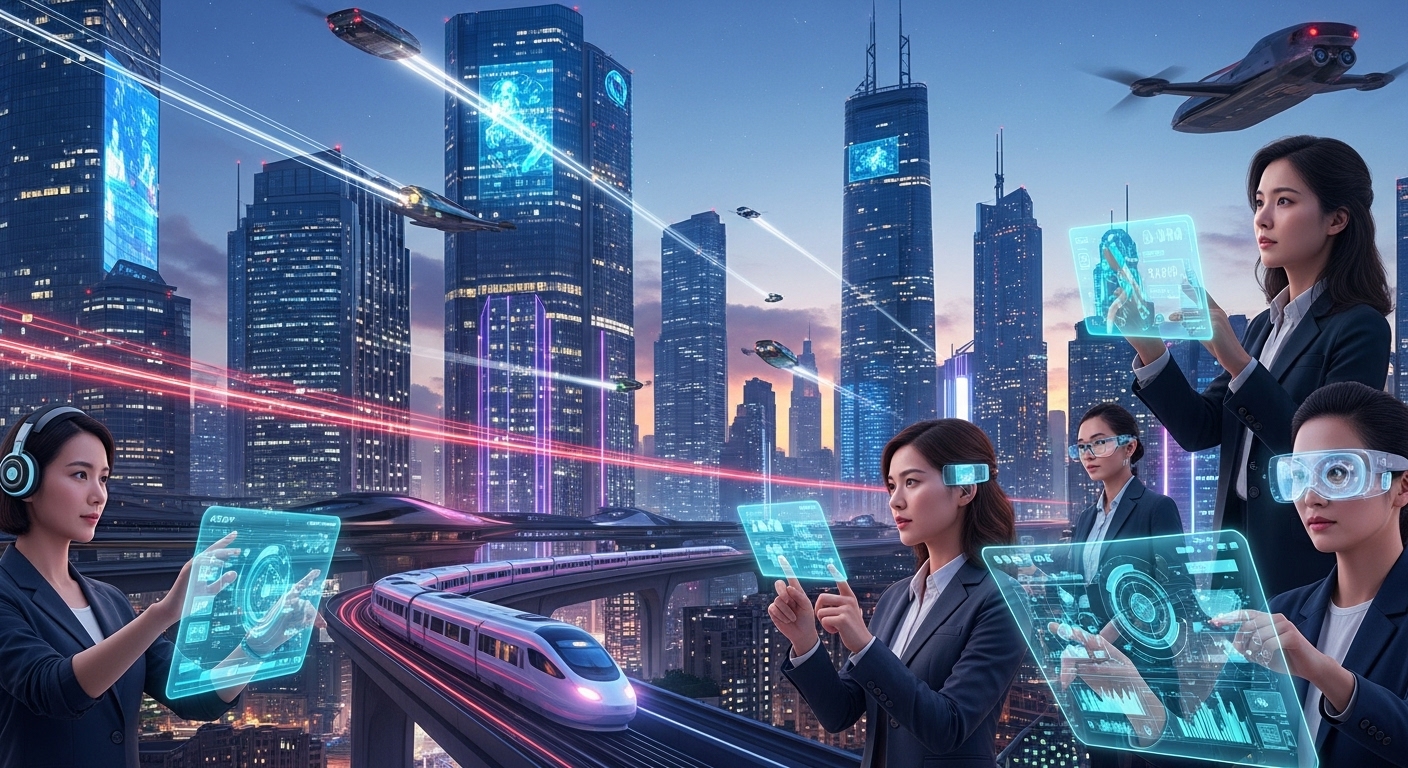
Introduction: Technology in the Modern Era
Technology has become the backbone of contemporary society. It influences how we communicate, work, learn, travel, and entertain ourselves. The pace of technological advancement continues to accelerate, reshaping industries and personal lives alike. What was once the domain of science fiction has now become part of our everyday reality, from artificial intelligence and smartphones to renewable energy systems and virtual reality.
The impact of technology extends far beyond convenience. It drives economic growth, bridges cultural divides, and opens up new possibilities for human creativity and problem-solving. Understanding the evolution, applications, and future of technology is essential to appreciating its role in shaping the world today.
The Evolution of Technology: From Ancient Tools to Digital Innovation
Humanity’s journey with technology begins with the simplest tools. The invention of the wheel, basic agricultural implements, and early machines helped humans survive and thrive. These tools were the precursors to more complex systems that defined civilizations.
The Industrial Revolution marked a significant leap in technological progress. Steam engines, textile machinery, and mechanized production transformed societies, economies, and daily life. Urbanization and industrialization brought new opportunities and challenges, illustrating the transformative power of innovation.
The 20th century introduced the digital revolution. Computers, the internet, and telecommunications networks revolutionized information processing and connectivity. From bulky early computers to the mobile devices we carry today, technology has continuously advanced, increasing speed, accessibility, and interactivity.
Computing and Artificial Intelligence: The New Frontier
Computers are central to modern technology. They process data, perform complex calculations, and facilitate global communication. From smartphones to supercomputers, computing technology underpins industries, research, and daily life.
Artificial intelligence (AI) represents the next stage in technological evolution. AI systems analyze vast amounts of data, identify patterns, and make decisions that enhance efficiency and performance. Applications of AI are widespread: in healthcare, AI can detect diseases and recommend treatments; in finance, it predicts market trends; in logistics, it optimizes supply chains.
Machine learning, a subset of AI, allows systems to improve over time. Autonomous vehicles, virtual assistants, and predictive analytics all rely on AI to function effectively, demonstrating its transformative potential across multiple sectors.
Communication Technology: Connecting the World
Communication technology has drastically changed how humans interact. The telephone, radio, and television were early innovations that connected people across distances.
The internet revolutionized communication by enabling instant messaging, video calls, and social networking. Today, billions of people can interact in real time, regardless of geographic location. Businesses, families, and communities have become more interconnected than ever.
Emerging technologies like 5G networks enhance connectivity, offering faster data transmission and enabling applications such as autonomous vehicles, real-time medical consultations, and immersive virtual experiences. Communication technology is more than convenience; it is a vital tool for global integration and progress.
Healthcare Technology: Transforming Medicine
Technology has profoundly impacted healthcare, improving outcomes and expanding access to medical services. Diagnostic tools, imaging systems, and wearable devices allow for early detection and monitoring of diseases.
Telemedicine connects patients with healthcare providers remotely, breaking geographic barriers and making care accessible to underserved populations. Robotics in surgery enables precision procedures, reducing recovery times and improving outcomes. AI-driven medical algorithms analyze data to assist doctors in diagnosis, treatment planning, and research.
Biotechnology and genetic engineering have also evolved. Gene editing techniques, such as CRISPR, enable targeted therapies and potential cures for previously untreatable conditions. Technology in healthcare is not only about treatment but also about prevention, personalization, and innovation.
Transportation Technology: Mobility Reimagined
Transportation technology has reshaped how people and goods move across the world. Automobiles, trains, and airplanes have progressively increased speed, efficiency, and accessibility.
Electric vehicles reduce reliance on fossil fuels, promoting sustainability. Autonomous vehicles, powered by AI and sensor technologies, promise safer roads and reduced human error. High-speed rail systems and concepts like the hyperloop aim to redefine long-distance travel with unprecedented speed and efficiency.
Urban mobility solutions, including ride-sharing platforms, electric scooters, and smart traffic management systems, improve convenience and reduce congestion. Transportation technology not only moves people but also influences urban development, economic growth, and environmental sustainability.
Education Technology: Learning in the Digital Age
Technology has revolutionized education, providing tools for interactive, personalized, and flexible learning. Digital platforms, online courses, and educational apps enable students to access resources beyond traditional classrooms.
Virtual classrooms allow teachers and students to collaborate regardless of physical location. Gamified learning engages students by turning lessons into interactive challenges that reinforce understanding and retention. AI-driven systems analyze performance and provide insights to optimize learning outcomes.
Education technology prepares students for the modern workforce by emphasizing digital literacy, coding, critical thinking, and problem-solving skills, making it an essential component of societal progress.
Entertainment Technology: Redefining Leisure
Entertainment has been profoundly influenced by technology. Streaming services, high-definition visuals, virtual reality, and immersive audio experiences have changed how people consume content.
Video games have grown into a multi-billion-dollar industry, combining storytelling, art, and interactivity to engage global audiences. Virtual and augmented reality create experiences that allow users to explore new worlds and interact in ways previously unimaginable.
AI algorithms personalize content recommendations, enhancing user experiences across music, movies, and gaming. Technology has not only transformed the entertainment industry but also influenced cultural trends and social interaction.
Business Technology: Driving Efficiency and Innovation
Technology is the backbone of modern business, enabling efficiency, scalability, and innovation. Automation and robotics streamline manufacturing, while software solutions improve operational management and decision-making.
Cloud computing allows organizations to store, process, and analyze vast amounts of data. Digital marketing leverages analytics to target customers effectively, improving engagement and revenue. Blockchain technology introduces secure, transparent systems for finance, supply chains, and digital identity verification.
By integrating technology, businesses can innovate faster, reach global markets, and adapt to changing economic landscapes, making it a critical driver of growth and competitiveness.
Emerging Technologies: The Future in Progress
The future of technology promises new frontiers with transformative potential.
Quantum Computing: Quantum systems can solve problems beyond the capabilities of classical computers, impacting fields like medicine, logistics, and cybersecurity.
Renewable Energy Technologies: Innovations in solar, wind, and energy storage make sustainable energy more viable, reducing environmental impact.
Smart Cities: IoT sensors and connected infrastructure optimize urban living, from traffic flow to energy management.
Space Technology: Advancements in space exploration, satellite communication, and potential commercial space travel expand human reach beyond Earth.
These emerging technologies illustrate the continuous evolution of innovation and its profound societal impact.
Ethical Considerations in Technology
With rapid advancement comes ethical responsibility. Data privacy, cybersecurity, and surveillance are pressing concerns in the digital era. AI decision-making raises questions about fairness, accountability, and transparency.
Technology must be accessible and inclusive, ensuring equitable benefits for all populations. Ethical innovation, responsible regulations, and public awareness are critical for maximizing the positive impact of technology while minimizing harm.
Conclusion: Technology as a Catalyst for Progress
Technology is more than tools and machines; it is a catalyst for human advancement. It drives innovation, improves quality of life, and connects people across the globe. From healthcare and education to transportation and entertainment, technology continues to shape society in profound ways.
As the pace of innovation accelerates, society faces both opportunities and responsibilities. By embracing technology thoughtfully and ethically, humanity can harness its potential to address global challenges, enhance creativity, and build a more connected and sustainable world.
The journey of technology is ongoing, reflecting human ingenuity, ambition, and curiosity. It is a testament to the limitless possibilities of human innovation and the transformative power of creative problem-solving in shaping the future.